As the World Cup kicks off today (June 11, 2026) in the United States/Canada/Mexico, let’s journey through the FIFA World Cup history – from its 1930 origins to the modern era – celebrating the milestones that make it football’s crown jewel.
The First World Cup (1930): Origins and Impact
The inaugural FIFA World Cup was held in Uruguay from July 13–30, 1930. Thirteen teams – mostly from the Americas – accepted invitations (no qualification took place) to compete. The host nation, Uruguay, was a football powerhouse (Olympic champions in 1924 and 1928) and became the first World Cup champions by beating Argentina 4–2 in front of a record crowd at Montevideo’s Estadio Centenario. This success cemented the World Cup’s place in football history, as national teams now had a formal tournament to compete on the global stage. The high-scoring 1930 tournament (an average of 3.88 goals per match) set a dramatic tone for the new competition.
Notable facts: The United States shocked England 1–0 in 1950 (USA’s first World Cup win). No third-place match was played in 1930; the USA and Yugoslavia are both considered joint-third.
Evolution of the Tournament: Format, Expansion, and Growth
From its group-then-knockout format in 1930, the World Cup has evolved dramatically. After World War II (no tournaments in 1942/46), FIFA expanded participation. Tournaments grew to 16 teams (1950s–70s), then 24 teams (1982–94) and 32 teams (1998–2022). Starting in 2026, a record 48 teams will compete. Qualification rounds now span years and six continental confederations, making the final tournament a month-long global festival.
Hosts alternate between continents (initially South America/Europe) to balance geography. Notable expansions: the 2002 World Cup (Korea/Japan) was first in Asia and co-hosted by two countries. The upcoming 2026 World Cup is the first to be hosted by three nations (USA, Canada, Mexico). Each expansion has fueled World Cup growth – for example, the 1994 USA World Cup saw unprecedented global interest, introducing new markets to the game.
Most Successful Teams in World Cup History
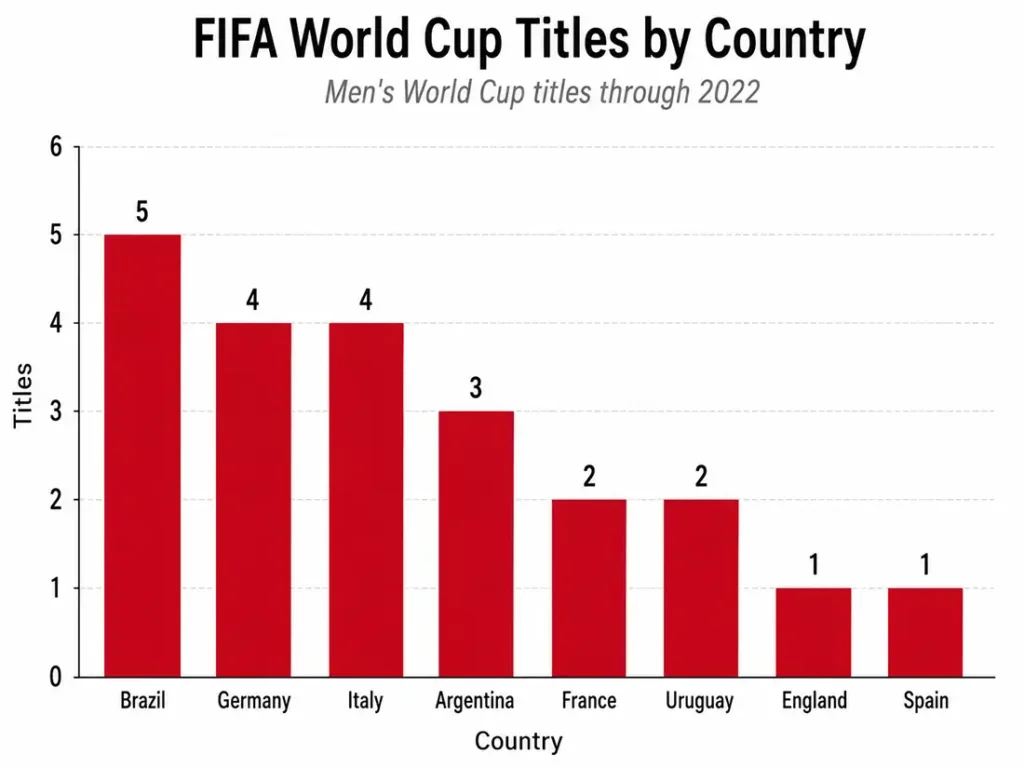
Only eight national teams have ever won the World Cup. These football powerhouses stand above all others:
Brazil (5 titles): The only country to play in every tournament, crowned champions five times. Their style and stars (Pelé, Ronaldo, etc.) made Brazil synonymous with World Cup success.
Germany (4 titles): West Germany/Germany claimed four trophies (1954, 1974, 1990, 2014). Notably, they reached many finals and semi-finals.
Italy (4 titles): Winners in 1934, 1938, 1982, 2006. Italy was the first team to win back-to-back titles (1934–38) and revived its legacy with a 2006 triumph.
Argentina (3 titles): Victorious in 1978, 1986, and 2022 (the latest tournament). Legends like Maradona and Messi powered Argentina to glory.
Uruguay (2 titles): Champions in 1930 (the first World Cup) and the famous 1950 tournament (defeating Brazil in the “Maracanazo”).
France (2 titles): Hosts and champions in 1998; champions again in 2018.
England (1 title): The 1966 hosts beat West Germany 4–2 (after extra time) at Wembley to win their only World Cup.
Spain (1 title): Crowned champions in 2010 in South Africa, their first appearance in a final.
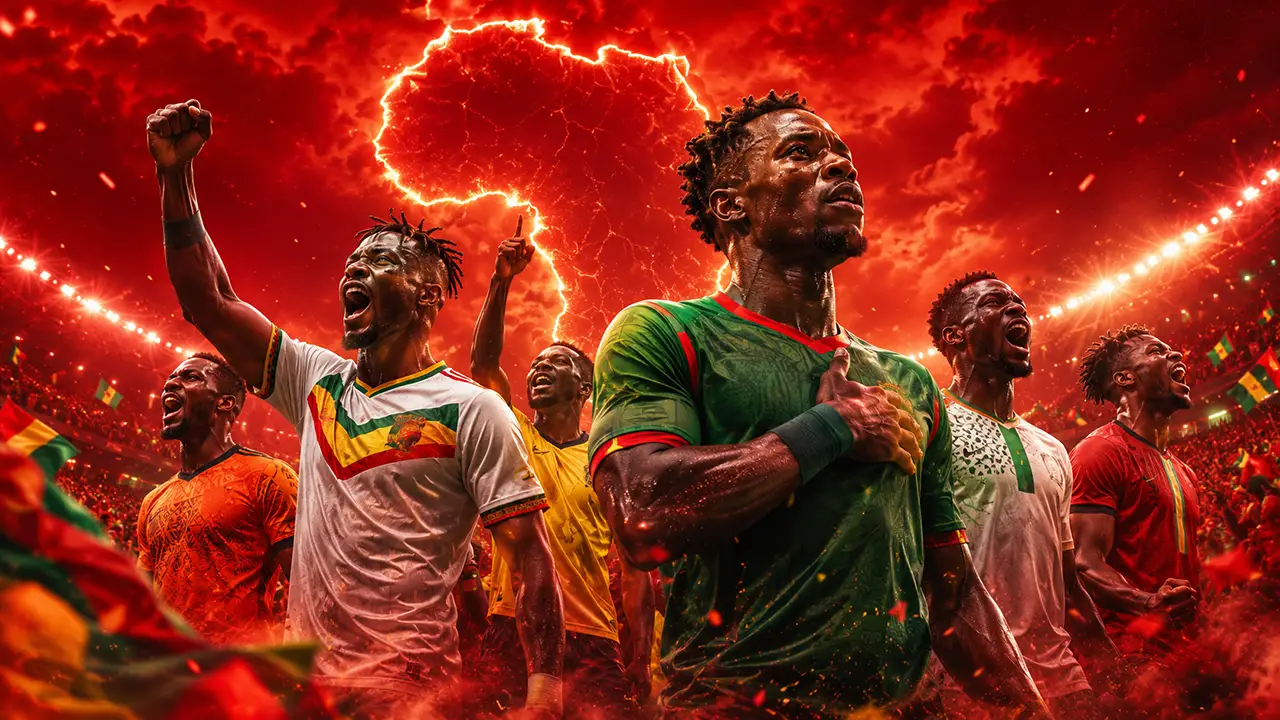
South Africa 2010 was a landmark moment, but African football’s influence on the tournament has continued to grow. Stronger squads, greater tactical experience, and Morocco’s breakthrough have created genuine belief that African teams could shock the world in 2026.
The following bar chart summarizes the World Cup titles by country:
Figure: Most successful World Cup teams. Brazil tops the list with 5 championships; Germany and Italy have 4 each. (Mermaid chart shown above.)
Legendary World Cup Moments
World Cup history is filled with unforgettable moments:
1950 Maracanazo (Brazil 1950): In Brazil’s iconic Maracanã Stadium, under 200,000 fans, underdogs Uruguay stunned host Brazil 2–1 in the final match. This upset – called the “Maracanazo” – shocked the world and gave Uruguay its second title.
Miracle of Bern (West Germany 1954): Hungary was the overwhelming favorite in the Switzerland 1954 final, but West Germany rallied from 2–0 down to win 3–2. This upset is one of football’s great comebacks.
Pele’s Rise (Sweden 1958): A 17-year-old Pelé burst onto the scene in the final, scoring twice to help Brazil beat Sweden 5–2. He became (and remains) the youngest scorer in a World Cup final.
England’s Triumph (England 1966): Geoff Hurst’s hat trick (the only final hat trick ever) and a controversial goal line decision led hosts England to a 4–2 victory over West Germany. England’s sole title came on home soil, an iconic moment for the nation.
Hand of God (Mexico 1986): Diego Maradona famously scored two of the game’s greatest goals against England: the “Hand of God” (illegal but uncalled handball) and the “Goal of the Century” (a 60-yard dribble past multiple defenders). Argentina went on to win the final and lift the trophy, making Maradona an enduring World Cup legend.
First Shootout Final (USA 1994): Brazil vs. Italy ended 0–0 in regulation; for the first time, a final was decided on penalties. Roberto Baggio’s missed penalty sealed Brazil’s 4th title.
France’s Home Win (France 1998): Hosts France beat Brazil 3–0 in the final. Zinedine Zidane’s two goals early in the match gave France its first World Cup, cementing Zidane’s legacy.
Germany’s Revenge (Brazil 2014): (Not yet cited) Germany famously demolished Brazil 7–1 in the semifinals, then defeated Argentina 1–0 in extra time of the final – securing Germany’s 4th title.
Recent Drama: The 2022 final saw Argentina beat France on penalties; Lionel Messi, finally, won his first World Cup and lifted the trophy.
These moments – upsets, stunning goals, and historic firsts – define the FIFA World Cup history and its drama. Each tournament brings new stories (like Spain’s tiki-taka triumph in 2010, Morocco’s historic run to the semifinals in 2022) that will be talked about for generations.
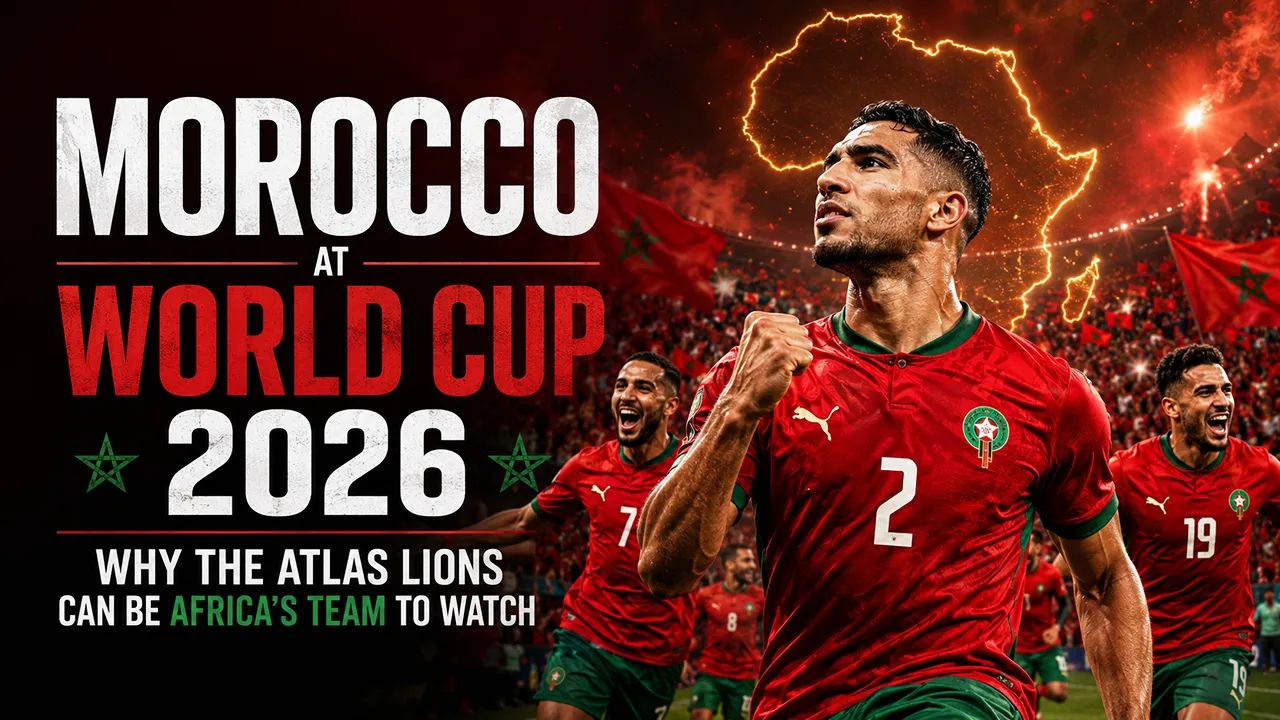
Morocco’s historic journey in 2022 showed how dramatically the balance of international football has changed. The Atlas Lions now enter the new tournament with even greater expectations, and our guide to Morocco at the World Cup 2026 examines why they could once again become Africa’s team to watch.
World Cup Records and Historic Achievements
The World Cup has spawned many impressive records:
Top Scorers: Miroslav Klose (Germany) holds the all-time record with 16 World Cup goals. Just Fontaine (France) scored 13 goals in the 1958 tournament – still the most in a single edition.
Fastest Goals: Václav Mašek (Czechoslovakia) scored after 15 seconds in 1962 (longtime record until 2002). In 2002, Turkey’s Hakan Şükür scored in 11 seconds in the third-place match.
Oldest/Youngest: Pele was the youngest goalscorer in a final (17 years old, 1958). Cameroonian striker Roger Milla (42 years old in 1994) became the oldest scorer in a World Cup.
Goals and Victories: Brazil holds records for most matches played and most goals scored. The highest-scoring match in World Cup history was Austria’s 7–5 win over Switzerland (1954).
Attendance: The Maracanazo final (1950) drew an official crowd of 173,850 (and likely many more unofficial spectators) – the largest ever for a World Cup final.
Prize and Trophy: Brazil’s third title (1970) gave them permanent possession of the Jules Rimet Trophy. Since 1974, winners receive the new FIFA World Cup Trophy.
Such records and stats highlight the event’s grandeur. The 2022 final, for instance, featured the highest viewership – an estimated 1.5 billion people watched Argentina’s victory. This global audience underscores the World Cup’s unique scale.
Why the World Cup Remains the Biggest Sporting Event
The FIFA World Cup is often called the world’s greatest sporting spectacle. Unlike regional club competitions, it is universal, involving nations from every continent. The tournament’s every-four-year format builds immense anticipation (even FIFA is considering more frequent editions).
Key reasons for its prestige:
Global Representation: Over 200 national teams compete in qualification for one of 32 (today 48) final spots. Even small nations dream of World Cup glory – e.g., when South Korea and Japan hosted in 2002, three of those nations were playing in their first finals.
Historic Rivalries and Drama: Matches often carry deep national pride. For example, when England and Germany meet, fans recall decades-old rivalries; when Argentina and Brazil clash, it’s a titanic South American showdown. These storylines captivate even casual fans.
Cultural Impact: The World Cup transcends sports. Cities hang flags, workplaces pause for matches, and even non-football countries tune in. Cultural moments – like Shakira’s Copa Mundial anthem, or iconic stadiums like Brazil’s Maracanã and Germany’s Wembley – become part of global pop culture.
Economic and Media Reach: Broadcasts of the World Cup reach billions – comparable only to events like the Olympics or the Super Bowl. The 2022 World Cup engaged ~5 billion people worldwide. Such reach influences economies (tourism boosts in host nations) and marketing (FIFA and FIFA sponsors invest heavily).
Evolution and Innovation: FIFA uses the World Cup to introduce new technologies (goal-line tech in 2014, VAR in 2018) and expand the game’s footprint. The 2026 expansion to 48 teams will allow more nations to compete and more matches to be played, increasing global engagement.
All these factors make the World Cup “the biggest event in football, and arguably the biggest in sports”. It unites fans across divides and showcases the highest level of international competition.
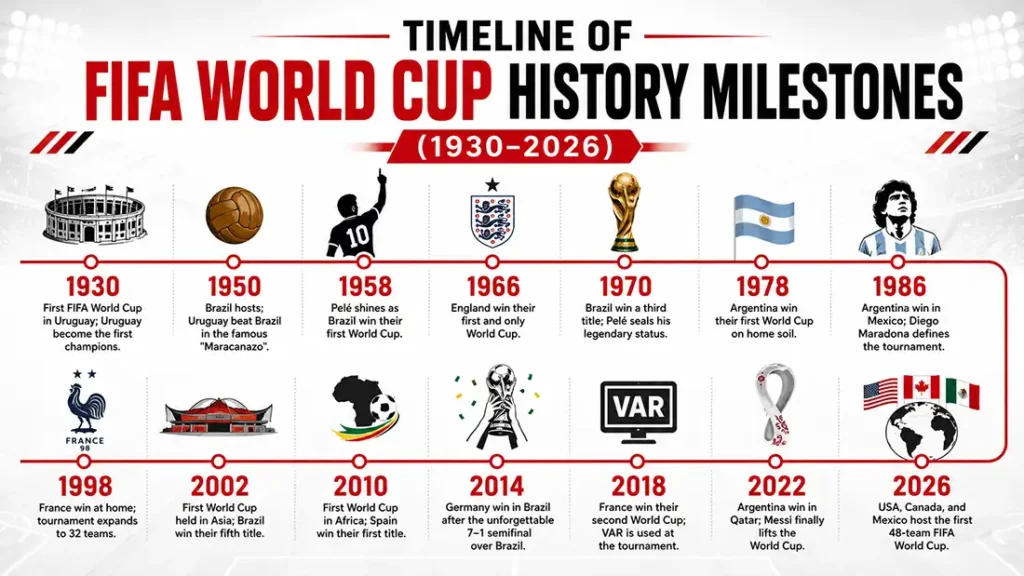
Figure: Timeline of FIFA World Cup history milestones (1930–2026). Key tournaments and iconic events are shown chronologically.
History Ignites Today’s World Cup
As the World Cup kicks off today, football fans carry nearly a century of memories into the stadiums and living rooms across the globe. The rich FIFA World Cup history – from Uruguay’s 1930 triumph to Argentina’s 2022 victory – fuels the passion and anticipation of every new match. Each tournament adds chapters to this storied legacy, and ExtraTime24 will be there to cover every goal, upset, and celebration. Stay tuned to ExtraTime24.com for daily World Cup coverage, analysis, and more as we witness the next great moments in World Cup history unfold!
Follow ExtraTime24’s World Cup 2026 coverage for live updates, expert analysis, and in-depth stories. Don’t miss a moment of this historic tournament – visit ExtraTime24.com now and join the excitement!
This overview was researched using FIFA’s official tournament archives, historical football records, and established sports-reference sources. ExtraTime24 independently reviewed and summarized the information to tell the story of the FIFA World Cup from 1930 to 2026.








No Comments